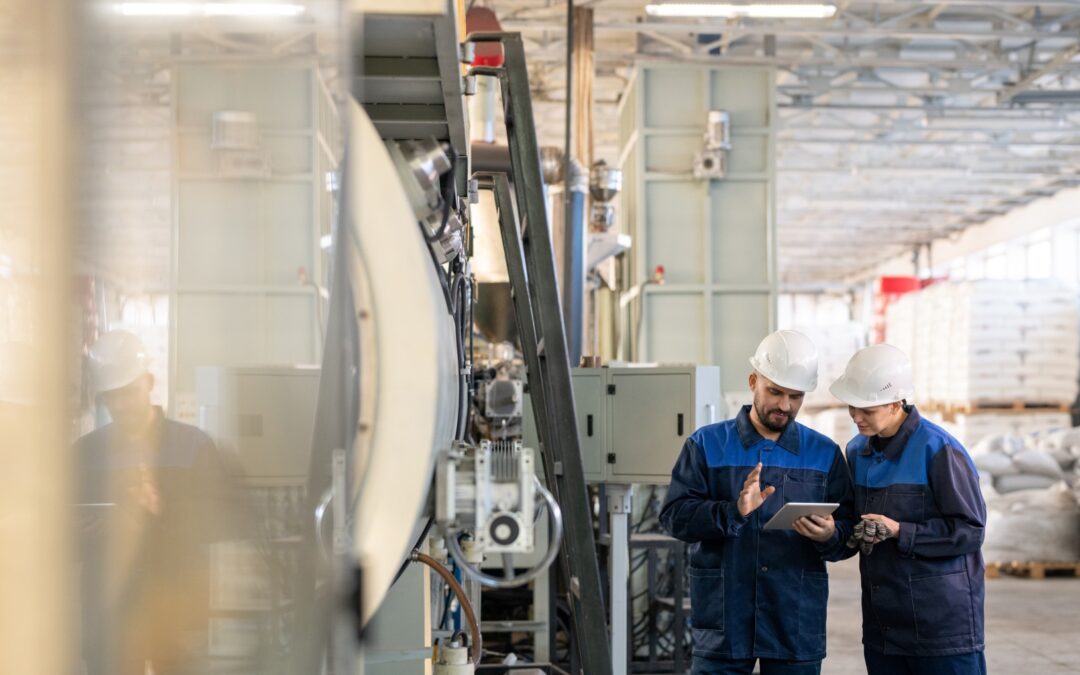
Walk into any manufacturing plant in India today and ask the safety officer what keeps them up at night. The answers will be consistent regardless of whether the plant is an auto component supplier in Pune, a pharmaceutical unit in Hyderabad, a textile mill in Coimbatore, or a heavy engineering workshop in Faridabad. Incomplete inspection records. Unresolved hazard findings. Safety audits conducted on paper that never reach the people who need to act on them. And the constant, nagging fear that the next incident is already sitting somewhere on the shop floor, undetected and unaddressed.
Safety management in Indian manufacturing has long been hampered by the same structural limitations that affect quality and operational management more broadly. Paper based systems, informal communication, and reactive rather than proactive approaches to hazard identification have left a significant gap between the safety standards that manufacturers aspire to and the safety reality that exists on their shop floors every day.
This gap has consequences. For workers who are injured or worse. For manufacturers who face regulatory penalties, operational shutdowns, and reputational damage. And for the broader ambition of Indian industry to compete at global standards where safety performance is a prerequisite, not an afterthought.
OSHA compliant factory inspection software is one of the most powerful tools available to close this gap. By digitizing and automating the entire safety inspection lifecycle, from hazard identification and risk assessment through to corrective action management and compliance reporting, the right safety inspection software transforms safety management from a checkbox exercise into a genuine, proactive, and measurably effective protection system for workers and the business alike.
Dataspire has built one of India’s most capable and comprehensive safety and compliance inspection platforms, combining OSHA compliant factory inspection software, plant safety audit software with mobile inspections, factory compliance audit platform capabilities, safety inspection software, and manufacturing inspection software into a single integrated solution purpose built for the Indian manufacturing environment.
This blog covers every key feature you need to look for when evaluating OSHA compliant factory inspection software, and explains how Dataspire delivers each of them for Indian manufacturers across every industry and every city.
Why OSHA Compliance Matters for Indian Manufacturers
Understanding the OSHA Framework in the Indian Context
OSHA, the Occupational Safety and Health Administration of the United States, sets some of the world’s most comprehensive and widely referenced workplace safety standards. While OSHA is a US regulatory body, its standards have become the de facto global benchmark for workplace safety management, and many Indian manufacturers supplying to US customers, operating joint ventures with US or European partners, or seeking to align with international best practices use OSHA standards as their safety management framework.
Beyond the OSHA framework itself, Indian manufacturers are subject to a range of domestic safety regulations including:
The Factories Act 1948 and its state level amendments
The Environment Protection Act and related environmental safety regulations
The Petroleum Act and rules governing hazardous material handling
Bureau of Indian Standards safety codes for specific industries
Industry specific safety requirements from automotive OEMs, pharmaceutical regulators, and food safety authorities
Customer specific safety audit requirements from international buyers and brand owners
The Cost of Non Compliance
Non compliance with safety standards is not just a regulatory risk. It is a business risk with direct financial and operational consequences. Indian manufacturers who fail safety audits or experience serious workplace incidents face:
Regulatory penalties and potential plant shutdowns that halt production
Increased insurance premiums that raise the cost of operations
Loss of customer certifications and supply contracts with international buyers
Reputational damage that affects recruitment, retention, and community relations
Civil liability in the event of worker injury or fatality
Lost productivity from injuries, investigations, and remediation activities
The right OSHA compliant factory inspection software does not just help manufacturers tick compliance boxes. It builds the genuine safety management capability that protects workers, protects the business, and builds the trust of customers, regulators, and communities.
Key Feature 1: Comprehensive and Customizable Digital Inspection Templates
Why Template Quality Defines Inspection Quality
The foundation of any effective OSHA compliant factory inspection software is the quality and flexibility of its inspection templates. A template that is too generic misses plant specific hazards. A template that is too rigid cannot adapt to the real diversity of inspection scenarios across a large manufacturing facility. The right safety inspection software provides templates that are both comprehensive and customizable.
What to Look For in Digital Safety Inspection Templates
When evaluating OSHA compliant factory inspection software, the template capability should include:
A library of pre built templates aligned to OSHA standards, ISO 45001, and Indian Factories Act requirements
Full customization capability to add, remove, or modify parameters for specific plant conditions
Zone specific templates that reflect the unique hazard profile of different areas such as welding bays, chemical storage, press shops, and electrical rooms
Inspection parameters organized by OSHA hazard categories including electrical safety, fire safety, machine guarding, PPE compliance, housekeeping, and ergonomics
Mandatory photograph fields for high risk findings that create irrefutable visual evidence
Scoring scales with clear criteria for each rating level so different inspectors score consistently
Support for multiple inspection types including daily safety walks, weekly departmental audits, monthly comprehensive inspections, and incident investigation checklists
How Dataspire Delivers Superior Template Capability
Dataspire’s safety inspection software provides a comprehensive template library built around both international OSHA standards and the specific requirements of Indian regulatory frameworks. Templates cover:
Electrical safety inspections aligned to IE Rules and OSHA 1910.303 standards
Fire safety and emergency preparedness inspections
Machine guarding and lockout tagout compliance inspections
Chemical and hazardous material handling inspections
PPE compliance and usage verification inspections
Ergonomics and manual handling risk assessments
Contractor and visitor safety compliance inspections
Environmental compliance and waste management inspections
Height work and scaffolding safety inspections
Key Feature 2: Mobile Inspection Capability That Works on the Shop Floor
Why Mobile Is Non Negotiable for Safety Inspections
Safety hazards do not exist on computers. They exist on the shop floor, in equipment rooms, on loading docks, and in chemical storage areas. Any safety inspection software that requires inspectors to return to a desk to record findings is a safety inspection software that will produce incomplete, delayed, and unreliable safety data. Mobile inspection capability is not a nice to have feature in plant safety audit software with mobile inspections. It is the most fundamental requirement.
What to Look For in Mobile Safety Inspection Tools
When evaluating plant safety audit software with mobile inspections, the mobile capability should include:
A fully functional inspection app for Android and iOS devices that requires no specialist hardware
Offline capability that allows inspections to continue in areas with no internet connectivity
Integrated camera functionality for instant photographic documentation of hazards
GPS tagging of findings to create accurate location records of where hazards were identified
Voice note capability for fast, hands free documentation in noisy shop floor environments
Simple, intuitive interface that any safety officer or supervisor can use without extensive training
Reliable performance on mid range devices without requiring expensive dedicated hardware
Fast data entry that does not slow down the inspection process
How Dataspire’s Mobile App Performs in Indian Factory Conditions
Dataspire’s plant safety audit software with mobile inspections was specifically tested and optimized for the real conditions found on Indian shop floors. Key performance characteristics include:
Full offline functionality with automatic background sync when connectivity is restored
Reliable operation in high temperature, high dust, and high vibration environments common in Indian heavy industry
Optimized performance on widely used mid range Android devices without battery drain or performance issues
Interface available in multiple regional languages to support diverse workforces across different states
Fast enough for a complete departmental safety inspection to be conducted in under 30 minutes
Key Feature 3: Real Time Hazard Reporting and Escalation
The Danger of Delayed Hazard Reporting
In safety management, time is the enemy. A hazard identified and reported in real time can be isolated and corrected before it causes an incident. A hazard recorded on a paper form and reported at the end of the shift may have caused an injury before anyone with authority to act on it ever heard about it. Real time hazard reporting is not just a convenience feature of OSHA compliant factory inspection software. It is a direct worker protection capability.
What to Look For in Real Time Reporting Features
Effective real time hazard reporting in safety inspection software should include:
Instant dashboard visibility of all new hazard findings the moment they are submitted
Automatic notifications to safety officers, supervisors, and plant managers for high severity findings
Escalation protocols that route critical safety hazards directly to senior leadership for immediate action
Color coded severity classification that distinguishes between critical, high, medium, and low priority findings
Real time open hazard count visible to all management levels at any time
Automatic alerts when critical hazards have not received an initial response within a defined time window
Shift handover reports that ensure open hazards from one shift are flagged to the incoming shift team
Dataspire’s Real Time Safety Dashboard in Action
Dataspire’s OSHA compliant factory inspection software includes a real time safety dashboard that gives safety managers, plant heads, and operations leaders at manufacturing sites across India an instant and comprehensive view of safety performance. The dashboard displays:
Live feed of all new safety findings categorized by severity and location
Current count of open, in progress, and overdue corrective actions
Heat map of the plant showing which zones have the highest concentration of open hazards
Shift by shift safety performance comparison across departments and production lines
Trend charts showing whether safety performance is improving or deteriorating over time
Inspector activity log showing which safety walks have been completed and which are overdue
Key Feature 4: Corrective Action Management That Closes the Loop
Why Open Hazards Are the Biggest Safety Risk of All
Identifying a hazard and recording it is only the first step. The hazard is not safe until it is resolved. An OSHA compliant factory inspection software that captures findings without a robust corrective action management system is a system that creates a false sense of security. Knowing about a hazard that has not been fixed is in some ways worse than not knowing about it, because it creates documented evidence of a known risk that was not acted upon.
What to Look For in Corrective Action Management
Effective corrective action management in a factory compliance audit platform should include:
Automatic creation and assignment of corrective actions from every safety finding
Mobile notification to the responsible person with full details and photographic evidence of the hazard
Priority based due date setting with different timelines for critical, high, medium, and low severity findings
Automatic reminder notifications as due dates approach with escalating urgency
Escalation to senior management for actions that go overdue beyond a defined threshold
Mandatory photographic proof of resolution required before an action can be marked as closed
Root cause documentation requirement for serious and recurring safety findings
Permanent audit trail of every action from identification through to verified closure
How Dataspire’s Corrective Action System Protects Workers and the Business
Dataspire’s factory compliance audit platform corrective action management system ensures that no identified safety hazard is ever forgotten or left permanently unresolved. The complete workflow includes:
Immediate Response Stage
Critical and high severity hazards trigger immediate notifications to safety officers and plant management
Responsible person receives all hazard details and photographs on their mobile device instantly
Initial response deadline set based on severity with automatic escalation if not met
Resolution Stage
Progress updates tracked in real time on the central safety dashboard
Interim control measures documented while permanent fixes are implemented
Due date extensions require management approval and documented justification
Closure and Verification Stage
Photographic proof of resolution uploaded by the responsible person
Closure verified by safety officer or designated approver before removal from open list
Root cause and permanent corrective action documented for serious findings
Closed findings archived permanently for audit evidence and trend analysis
Key Feature 5: Analytics and Trend Analysis for Proactive Safety Management
Moving From Reactive to Proactive Safety Management
The difference between a factory that merely complies with safety requirements and a factory that genuinely protects its workers is the ability to see safety problems coming before they become incidents. This requires analytical capability that goes far beyond counting open hazards and closed corrective actions. It requires the ability to identify patterns, trends, and systemic risk factors from inspection data accumulated over time.
Trend analysis showing safety inspection scores over days, weeks, and months by zone, department, and shift
Recurring hazard pattern identification that flags systemic issues requiring root cause intervention
Near miss and hazard observation trend correlation with actual incident data
Inspector performance analysis identifying consistency variations between different safety auditors
Shift comparison analytics revealing whether safety standards vary between day, evening, and night shifts
Department benchmarking showing which areas of the plant have the strongest and weakest safety performance
Predictive indicators based on leading safety metrics that signal increasing incident risk before incidents occur
Dataspire’s Analytics Engine for Safety Performance
Dataspire’s manufacturing inspection software analytics module provides safety managers and plant leadership with the intelligence needed to move from reactive to proactive safety management. Specific analytical capabilities include:
Automated weekly and monthly safety performance reports generated without any manual effort
Heat map analysis showing the physical distribution of safety findings across the plant layout
Hazard category analysis revealing which types of hazards, electrical, mechanical, chemical, ergonomic, are most prevalent
Time based analysis showing whether specific times of day, days of the week, or points in the production cycle generate more safety findings
Correlation analysis between safety inspection frequency and incident rates demonstrating the measurable impact of inspection activity on safety outcomes
Key Feature 6: Audit Trail and Documentation for Compliance Reporting
Why Documentation Is the Foundation of Compliance
In safety compliance management, what is not documented did not happen. When a regulatory inspector, customer auditor, or certification body visits a manufacturing plant and asks for evidence of safety inspection compliance, the ability to produce complete, organized, and timestamped inspection records is the difference between a successful audit and a potentially business damaging failure.
What to Look For in Compliance Documentation Features
Effective documentation capability in a factory compliance audit platform should include:
Complete and permanent record of every inspection conducted with timestamp, inspector identity, and location
Full photographic evidence archive organized by date, zone, and hazard category
Corrective action records showing identification, assignment, progress, and verified closure for every finding
Automated report generation in formats suitable for regulatory submission and customer audit presentation
Exportable data in standard formats compatible with existing quality management and ERP systems
User access controls that protect the integrity of inspection records from unauthorized modification
Retention policies that maintain inspection records for the required regulatory period
Digital signature capability for inspection sign off and corrective action verification
How Dataspire Simplifies Compliance Documentation
Dataspire’s OSHA compliant factory inspection software automatically maintains a comprehensive, organized, and instantly retrievable compliance documentation archive throughout the year. When an audit or inspection visit arrives, safety managers at plants in Pune, Bengaluru, Ahmedabad, and Chennai can generate a complete compliance report covering any period with a single click. The report includes:
Complete inspection history with dates, scores, and inspector details
Full photographic evidence for every finding and every corrective action closure
Trend analysis demonstrating continuous improvement in safety performance
Open and closed corrective action summary with resolution timelines
Compliance percentage against defined safety standards for every zone and department
Key Feature 7: Multi Site Management for Manufacturing Groups
The Challenge of Safety Consistency Across Multiple Plants
For manufacturing groups operating plants in multiple locations across India, maintaining consistent safety standards is one of the most persistent and difficult challenges. Each plant has its own safety officer, its own inspection practices, and its own interpretation of safety standards. Without a unified platform, it is essentially impossible for group leadership to get a true picture of safety performance across the organization or to ensure that best practices are consistently applied everywhere.
What to Look For in Multi Site Safety Management
Effective multi site capability in manufacturing inspection software should include:
Single dashboard view of safety performance across all plant locations simultaneously
Standardized inspection templates deployed consistently across all sites
Cross site benchmarking that compares safety scores between plants and regions
Group level corrective action tracking showing open hazards across the entire organization
Site specific customization within a standardized framework to accommodate local conditions
Centralized user management with site specific access controls
Group level analytics and reporting that give leadership a consolidated safety performance view
Dataspire’s Multi Site Safety Platform for Indian Manufacturing Groups
Dataspire’s factory compliance audit platform includes robust multi site management capabilities that are particularly valuable for Indian manufacturing groups with plants spread across multiple states and industrial regions. Group safety managers can:
View real time safety scores for every plant in the group on a single consolidated dashboard
Deploy standardized inspection templates across all sites while allowing site specific additions
Compare safety performance between plants in Pune, Coimbatore, Ludhiana, and Bengaluru on the same screen
Identify which plants are leading on safety performance and facilitate cross site learning
Generate group level compliance reports for board level review and investor reporting
Track corrective action closure rates across the group to identify sites needing additional support
Key Feature 8: Integration With Existing Safety and Operational Systems
Why Integration Matters for Safety Management
Safety management does not exist in isolation from the broader operational management of a manufacturing plant. Unsafe equipment generates maintenance work orders. Safety inspection findings often relate to quality control issues. Incident investigations generate corrective actions that overlap with process improvement activities. Effective OSHA compliant factory inspection software should integrate with the other digital systems the plant uses rather than creating another data silo.
What to Look For in Integration Capability
When evaluating safety inspection software integration capability, look for:
API connectivity with major ERP platforms including SAP, Oracle, and Microsoft Dynamics
Integration with maintenance management systems to automatically generate work orders from equipment safety findings
Connectivity with quality management systems to share corrective action data across safety and quality functions
Export capability in standard data formats including CSV, Excel, and PDF for offline analysis and reporting
Integration with HR systems for safety training record management and inspector certification tracking
Compatibility with existing plant network and IT infrastructure without requiring major investment
Dataspire: Trusted Across Indian Industry for Safety and Compliance Excellence
Our Commitment to Worker Safety in Indian Manufacturing
Dataspire believes that every worker in every Indian factory deserves a safe workplace. This belief drives every product decision the company makes. Dataspire’s plant safety audit software with mobile inspections, OSHA compliant factory inspection software, factory compliance audit platform, safety inspection software, and manufacturing inspection software have all been designed with a single overriding purpose: to make it easier for Indian manufacturers to protect their workers, comply with safety regulations, and build workplaces where people go home safe every single day.
Industries We Serve Across India
Dataspire’s safety and compliance inspection platform currently serves manufacturers across a wide range of Indian industries including:
Automotive OEMs and auto component suppliers in Pune, Chennai, Manesar, and Hosur
Pharmaceutical and life sciences manufacturers in Hyderabad, Ahmedabad, and Bengaluru
Textile and garment manufacturers in Coimbatore, Tirupur, Surat, and Ludhiana
Heavy engineering and fabrication plants in Jamshedpur, Faridabad, and Visakhapatnam
Food and beverage processing units in Pune, Ahmedabad, and Chennai
Chemical and specialty materials manufacturers in Vadodara, Ankleshwar, and Vapi
Electronics and electrical equipment manufacturers in Bengaluru, Pune, and Noida
Plastics and rubber processing plants in Rajkot, Ahmedabad, and Chennai
Pune, Nashik, Aurangabad, and Kolhapur in Maharashtra
Chennai, Coimbatore, Hosur, Tirupur, and Madurai in Tamil Nadu
Ahmedabad, Rajkot, Surat, Vadodara, Halol, and Ankleshwar in Gujarat
Bengaluru, Mysuru, Hubli, and Tumkur in Karnataka
Ludhiana, Amritsar, Jalandhar, and Mohali in Punjab
Faridabad, Gurugram, Manesar, Bawal, and Bhiwadi in Haryana
Hyderabad, Visakhapatnam, and Vijayawada in Telangana and Andhra Pradesh
Jamshedpur, Ranchi, and Rourkela in Jharkhand and Odisha
Indore, Bhopal, and Pithampur in Madhya Pradesh
Noida, Greater Noida, and Ghaziabad in Uttar Pradesh
How to Choose the Right OSHA Compliant Factory Inspection Software: A Quick Evaluation Checklist
Before making a final decision on safety inspection software for your plant, use this checklist to ensure the platform you are evaluating covers all the critical requirements:
Template and Checklist Capability
Does it provide pre built templates aligned to OSHA, ISO 45001, and Indian Factories Act requirements?
Can templates be fully customized for your specific plant, zones, and hazard profile?
Does it support multiple inspection types from daily safety walks to comprehensive monthly audits?
Mobile and Field Capability
Does it work fully offline in low connectivity zones on standard Android devices?
Does the mobile app support photographic evidence capture, GPS tagging, and voice notes?
Is the interface simple enough for supervisors with limited digital experience to use confidently?
Real Time Visibility and Escalation
Does it provide a real time dashboard visible to all relevant management levels?
Does it automatically escalate critical safety findings to senior leadership?
Does it generate shift handover reports that flag open hazards to incoming teams?
Corrective Action Management
Does it automatically create and assign corrective actions from every safety finding?
Does it require photographic proof of resolution before actions can be closed?
Does it escalate overdue actions automatically with increasing urgency?
Analytics and Reporting
Does it generate automated performance reports without manual effort?
Does it identify recurring hazard patterns that indicate systemic safety risks?
Does it support compliance reporting for regulatory and customer audit purposes?
Multi Site and Integration Capability
Does it support multiple plant locations on a single consolidated dashboard?
Does it integrate with your existing ERP, maintenance, and quality management systems?
Does it provide exportable data in standard formats for external reporting?
Conclusion: Safety Compliance Is Not a Checkbox. It Is a System.
The factories that genuinely protect their workers and consistently pass safety audits are not the ones with the most safety posters on their walls or the thickest safety manuals on their shelves. They are the ones that have built a safety management system that finds hazards before they cause incidents, resolves them before they become records of negligence, and learns from every finding to make the workplace progressively safer every week.
Dataspire’s OSHA compliant factory inspection software, plant safety audit software with mobile inspections, factory compliance audit platform, safety inspection software, and manufacturing inspection software together deliver exactly this system for Indian manufacturers across every industry and every location.
If your safety program is still running on paper checklists, WhatsApp photos, and monthly audit reports that nobody acts on, the gap between your current safety performance and the standard your workers deserve and your customers expect is wider than you think.
Contact Dataspire today. Find out how the right safety inspection software can close that gap, protect your people, satisfy your auditors, and build the safe, compliant, and world class manufacturing operation that Indian industry deserves.